
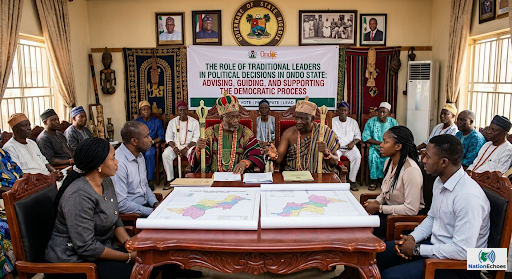

Traditional leaders continue to play an important and sometimes underestimated role in the political structure of many Nigerian states, including Ondo State. Although Nigeria operates a modern democratic system, traditional institutions remain influential in shaping public opinion, maintaining community stability, and indirectly affecting political outcomes.
Who Are Traditional Leaders?
Traditional leaders are custodians of culture and customs. In Ondo State, this includes kings (Obas), chiefs, and other recognized community heads who serve as symbols of unity and heritage. While they do not hold formal political office under Nigeria’s constitution, their influence in local affairs remains significant.
Political Influence Without Formal Power
One of the most interesting aspects of traditional leadership in Ondo State politics is that it is largely informal yet highly impactful. Traditional rulers do not contest elections or make laws, but their voices often carry weight in political matters.
Politicians frequently consult them during campaigns to gain legitimacy and community acceptance. In many cases, the endorsement of a respected traditional ruler can significantly boost a candidate’s popularity within a local government area or town.
Role in Elections and Voter Mobilization
During elections, traditional leaders often serve as moral guides rather than political actors. They encourage peace, advise their subjects to vote responsibly, and discourage violence or electoral malpractice.
In rural communities especially, their influence can shape voter turnout. Many citizens still hold strong respect for their cultural leaders and may be influenced by their guidance, even if indirectly.
Conflict Resolution and Political Stability
Traditional rulers also play a major role in resolving conflicts that may arise from political competition. Whether it is disputes between supporters of different parties or tensions during election periods, community leaders often step in to calm situations before they escalate.
In Ondo State, where communities value harmony and cultural heritage, traditional institutions often act as a bridge between government authorities and the people.
Relationship with Modern Government
The relationship between traditional rulers and elected officials is a delicate balance. While traditional leaders are expected to remain non-partisan, they still maintain close relationships with government representatives for the development of their communities.
Governors, lawmakers, and local government chairpersons often collaborate with them on issues such as security, infrastructure, and community development. However, this relationship sometimes raises concerns when traditional rulers are perceived to be too politically aligned with certain parties or candidates.
Challenges Facing Traditional Institutions
Despite their influence, traditional leaders face several challenges in modern politics:
- Reduced constitutional authority compared to the past
- Political interference and pressure during elections
- Internal disputes over chieftaincy titles
- Limited formal role in policymaking
These challenges sometimes reduce their effectiveness in maintaining neutrality and authority.
Conclusion
Traditional leaders remain a powerful but informal force in the political landscape of Ondo State. While they do not participate directly in elections or governance, their influence on community behavior, voter decisions, and conflict resolution cannot be ignored.
As democracy continues to evolve in Nigeria, the role of traditional institutions will likely remain relevant—serving as a cultural anchor and a stabilizing force in political life.