
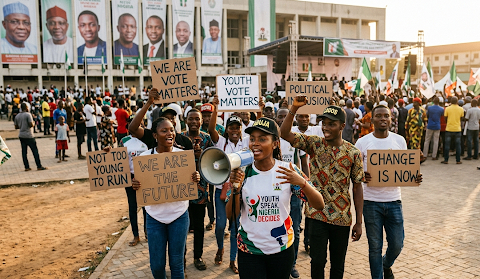

Nigeria is often described as a young nation—not just in its post-independence history, but in its demographics. With a significant percentage of the population under the age of 35, young people are not only the future of the country—they are its present reality.
Yet, a critical question continues to surface: are Nigerian youths truly awakening to their political power, or are they still trapped in apathy?
A Generation at a Crossroads
For years, Nigerian youths were widely perceived as politically disengaged—more focused on survival, entertainment, and personal advancement than governance. Politics was seen as a “dirty game,” reserved for older, more experienced actors.
However, recent developments suggest that this narrative is changing.
From increased voter registration to active participation in political discourse on social media, young Nigerians are beginning to find their voice. The question now is whether this awakening is deep and sustained—or just a temporary surge.
The Rise of Political Consciousness
The digital age has played a major role in shaping youth involvement. Platforms like Twitter (now widely known as X), Facebook, and TikTok have become powerful tools for political engagement.
Through these platforms, young people:
- Share information and opinions
- Mobilize support for causes
- Hold leaders accountable in real time
Movements driven largely by youths have demonstrated the power of collective voices in influencing national conversations.
From Online Activism to Offline Action
While online engagement is important, real political power lies in offline participation—voting, organizing, and even contesting for office.
There are encouraging signs:
- More youths are registering to vote
- Some are contesting for political positions
- Civic organizations led by young people are gaining visibility
However, there is still a gap between online enthusiasm and real-world political action. Many who speak passionately online fail to show up during elections.
Barriers Facing Youth Participation
Despite growing awareness, several challenges continue to limit youth involvement in Nigerian politics:
1. Financial Constraints
Running for political office in Nigeria is expensive. Nomination forms, campaigns, and logistics often require resources beyond the reach of the average young person.
2. Political Structure and Godfatherism
Established political structures are often controlled by older elites, making it difficult for newcomers—especially youths—to break in without backing.
3. Disillusionment and Distrust
Years of unmet promises and perceived electoral irregularities have led to skepticism. Some youths question whether their participation can truly make a difference.
4. Economic Pressure
With many young Nigerians focused on daily survival due to unemployment and rising living costs, political participation can feel like a luxury.
Signs of an Awakening
Despite these obstacles, there are clear indicators that a shift is happening:
- Increased political discussions among youths
- Growing demand for transparency and accountability
- Emergence of youth-focused political movements
- Greater willingness to challenge the status quo
This suggests that the era of total political apathy among Nigerian youths may be fading.
The Risk of Apathy
However, the risk of falling back into apathy remains real. Political fatigue, frustration, and lack of visible change can discourage even the most passionate individuals.
Apathy is dangerous because:
- It allows poor leadership to persist
- It weakens democratic institutions
- It silences the voice of the majority
In a country where youths form a large portion of the population, disengagement effectively hands over power to a smaller, more active group.
The Way Forward: From Awareness to Influence
For Nigerian youths to move from awakening to real influence, certain steps are essential:
- Active Participation: Beyond social media, engage in voting, community organizing, and public discourse
- Political Education: Understand policies, governance structures, and rights
- Support for Credible Candidates: Focus on competence and integrity rather than sentiment
- Collective Action: Build networks and movements that can drive change
- Accountability: Continuously demand transparency from leaders
Conclusion: A Defining Choice
The future of Nigerian politics will be shaped, to a large extent, by the decisions of its youth population. The choice is clear: remain on the sidelines or step into the arena.
Awakening has begun—but whether it leads to transformation depends on consistency, courage, and commitment.
Nigeria does not lack potential. What it needs is a generation willing to turn its voice into action.
NationEchoes continues to amplify the voices and issues that matter most to Nigerians.